Space Newsspace history and artifacts articlesMessagesspace history discussion forumsSightingsworldwide astronaut appearancesResourcesselected space history documents
advertisements
From a glass gantry lift to the slide back to Earth
The ups and downs of space shuttle Endeavour's new Oschin display
November 11, 2026
— As soon as it went vertical, it became clear; nothing was going to top visitors' interests more than seeing the space shuttle Endeavour in its launch configuration. But as the saying goes (sort of), if you can't top it, then take them to the top and send them sliding down.
When the California Science Center opens the Samuel Oschin Air and Space Center on Friday (Nov. 13), there will be hundreds of artifacts and exhibits for guests to see. It is among only a handful of museums that can offer the chance to board the forward section of a Boeing 747 jetliner and then see Mercury, Gemini and Apollo spacecraft, all three of NASA's original crewed space capsules.
Omit Endeavour and the Oschin still has one of the best air and space collections in the world.
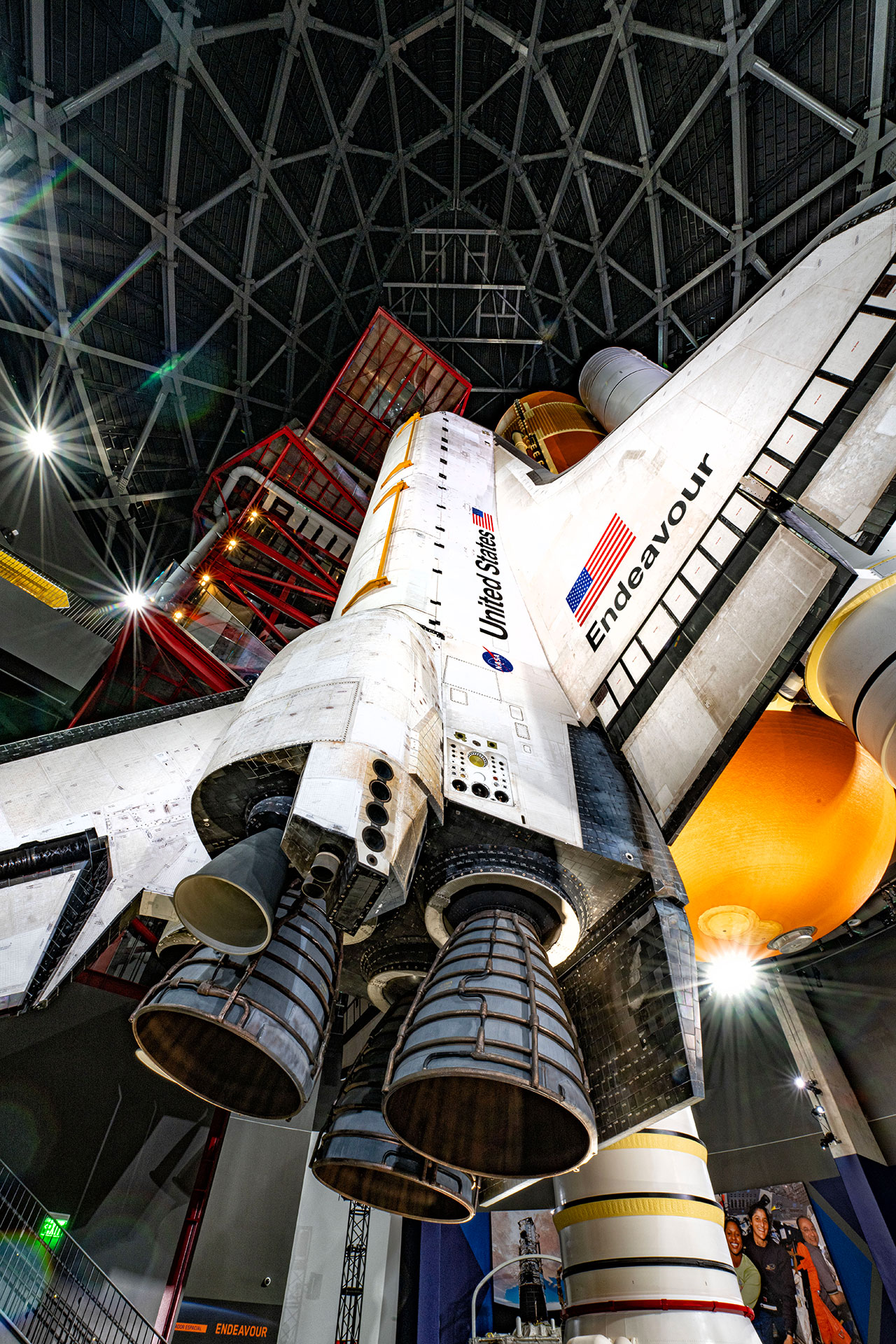
Endeavour was already impressive when the science center had the orbiter on its wheels. The experience is completely different, though, when standing below what is now believed to be the tallest artifact on indoor museum display (at 184 feet tall [56 meters]).
"You don't realize how big it is until it is like this," said former NASA Administrator Charlie Bolden, a space shuttle commander. "When you walk out [of the reveal], it is just amazing."
According to Jeffrey Rudolph, the California Science Center's president and CEO, test groups who were allowed in early to tour the entire Oschin center congregated around the shuttle more than anything else. They lingered there, too.
"The reason we did the testing was because we thought that people might spend longer than a typical museum visit and that appears to be the case," Rudolph told collectSPACE.
Could the science center offer anything that would pull visitors away from standing underneath and around Endeavour?
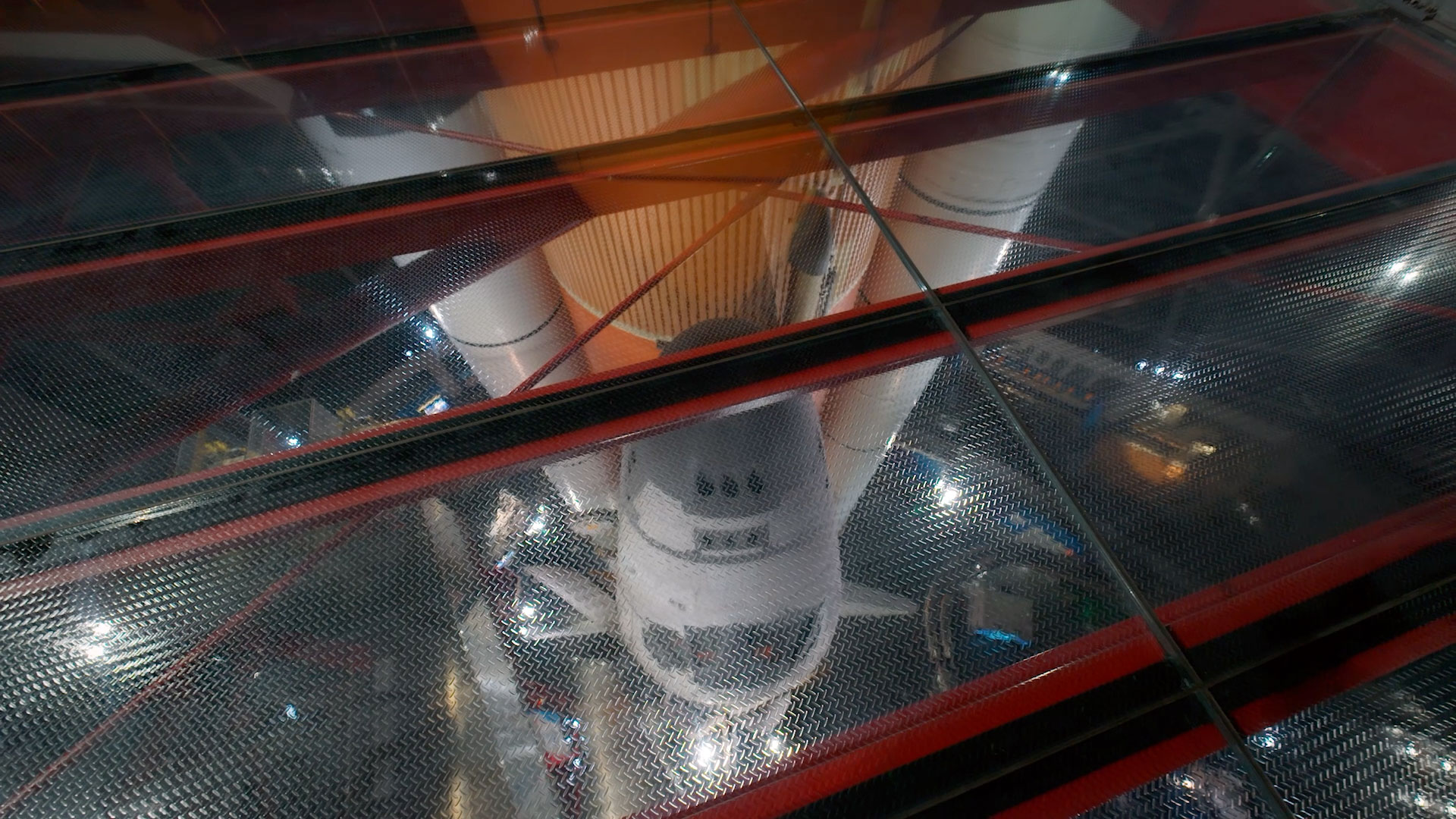
How about the chance to ascend above the orbiter and then look down through a glass platform? Or taking the quick way down — an enclosed slide that takes you from being even with the top of Endeavour's wings back to the ground level.
Guests at the Samuel Oschin Air and Space Center first encounter Endeavour through a cinematic, J.J. Abrams-produced reveal that then spills them out onto the building's second floor. From there, they can choose to descend a staircase, ride a "normal" elevator or plunge down a slide to the first floor to walk around underneath the space shuttle (more on that last option below).
If guests remain on the second floor, though, they can follow a wide loop around Endeavour, offering a fantastic view into the orbiter's payload bay, beyond its one open 60-foot-long (18-m) door. This configuration offers both the appearance of the full stack as it looked on the launch pad and an unobstructed view of what is inside the cargo hold (which replicates what Endeavour carried into space on its 20th mission [STS-118] in 2007).
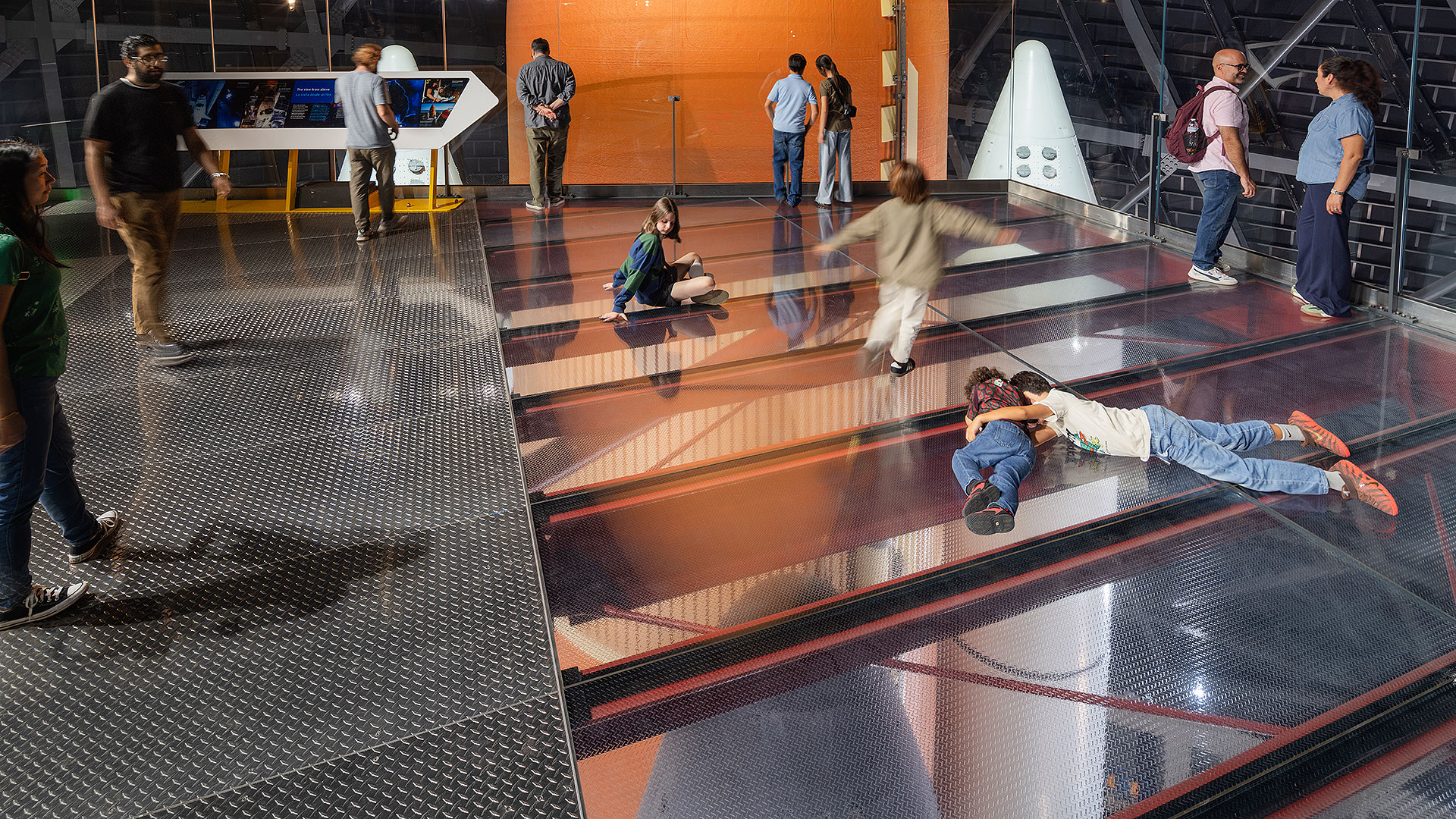
It is from here that guests (with $10 reservation tickets and the lack of a fear of heights), can ascend the launch tower by boarding one of two glass-walled lifts on a ride up the side of the shuttle stack. The elevator first climbs to 140 feet (43 m), where the doors open out onto a glass observation platform. Unlike even the grated metal floor on the launch pad gantry, the view between people's feet is one that even the astronauts have not had before.
In addition to the orbiter's nose, visitors can look into Endeavour's forward windows to see the flight deck, where the commander and pilot sat, and the aft flight deck, from where satellites were deployed, the Canadarm robotic arm was controlled and dockings were commanded.
Guests then take the elevator a level down for a glimpse into the middeck through the open crew hatch, as well as the payload bay from the top down. Also here are a couple of the slidewire baskets that, while fortunately never needed during the shuttle program, would have been used to evacuate the pad during an emergency.
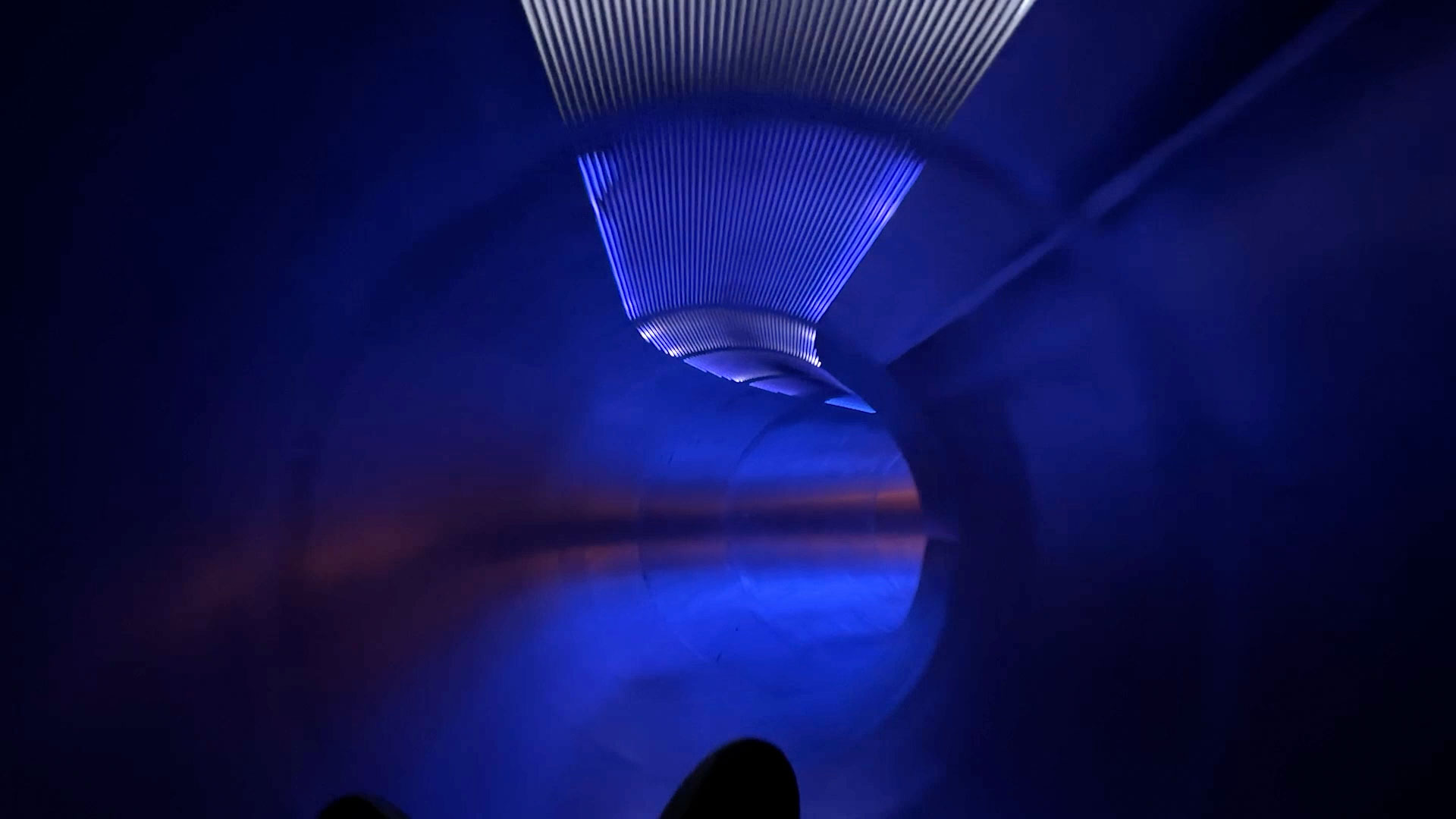
The other feature of the Samuel Oschin Shuttle Gallery that immediately draws lines, especially by younger visitors, is the descent slide.
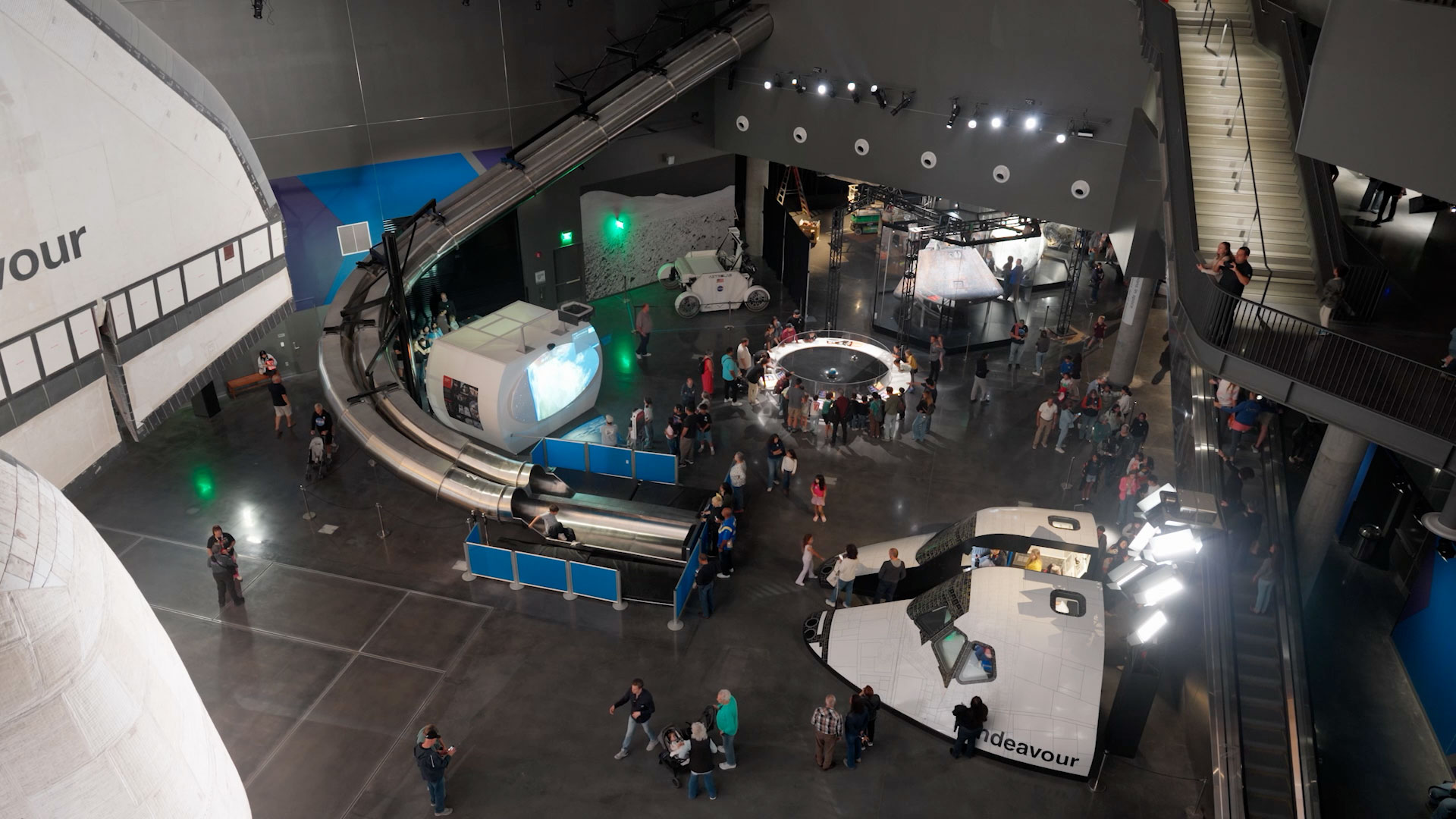
Designed to represent the path that the orbiter took to return to Earth as a glider, the enclosed ride may not be as harrowing as the escape basket was on the launch pad, but it still drops 45 feet (14 m) in elevation from the second to ground floor in about 15 seconds.
"Depending on what clothes they are wearing and how experienced they are with slides — tucking up their legs and keeping their hands on their chest — guests can go fairly fast," said Dennis Jenkins, a former space shuttle program engineer and the science center's project manager for the Samuel Oschin Air and Space Center. "We installed a nice, thick, padded bumper at the end of the slide to avoid people from flying off."
On the slide, riders see a bright orange light representing the glowing plasma that enveloped the shuttle as it entered the atmosphere. They also hear a double boom, evoking the sound of the nose and tail made as each broke the sound barrier on the return to Earth.
"I have no plans to go down the slide," said Lynda Oschin, who chose to honor the legacy of her late husband, Samuel, by directing their family foundation to make the leading donation for the air and space center. "I don't think I can handle it. It's only 15 seconds, but if you're scared, 15 seconds is a long time."
Her own reluctance aside, Oschin is thrilled that kids of all ages are finally getting to enjoy the product of decades of planning and years of work.
"This is just going to be so exciting for everybody," she said. "People have waited for this for a long time. I think those lines outside are going to start early in the morning and they're going to go for weeks and weeks. It's all very exciting."
The California Science Center's Samuel Oschin Air and Space Center opens to the public at 11:15 a.m. PST on Friday (Nov. 13), following a private opening ceremony and ribbon cutting. General admission is free, but timed entry tickets are needed for the Samuel Oschin Air and Space Center due to the high demand being driven by its opening. Reservations can be made online or at 213-744-2019.
The glass observation platform at the 140-foot level of the Samuel Oschin Space Shuttle Gallery's Launch Tower offers guests an unprecedented view of the Endeavour in its launch configuration. (California Science Center/ZGF Architects/Mike Kelley)
"You don't realize how big it is until it is like this," said former NASA Administrator Charlie Bolden and shuttle commander. (California Science Center/ZGF Architects/Mike Kelley)
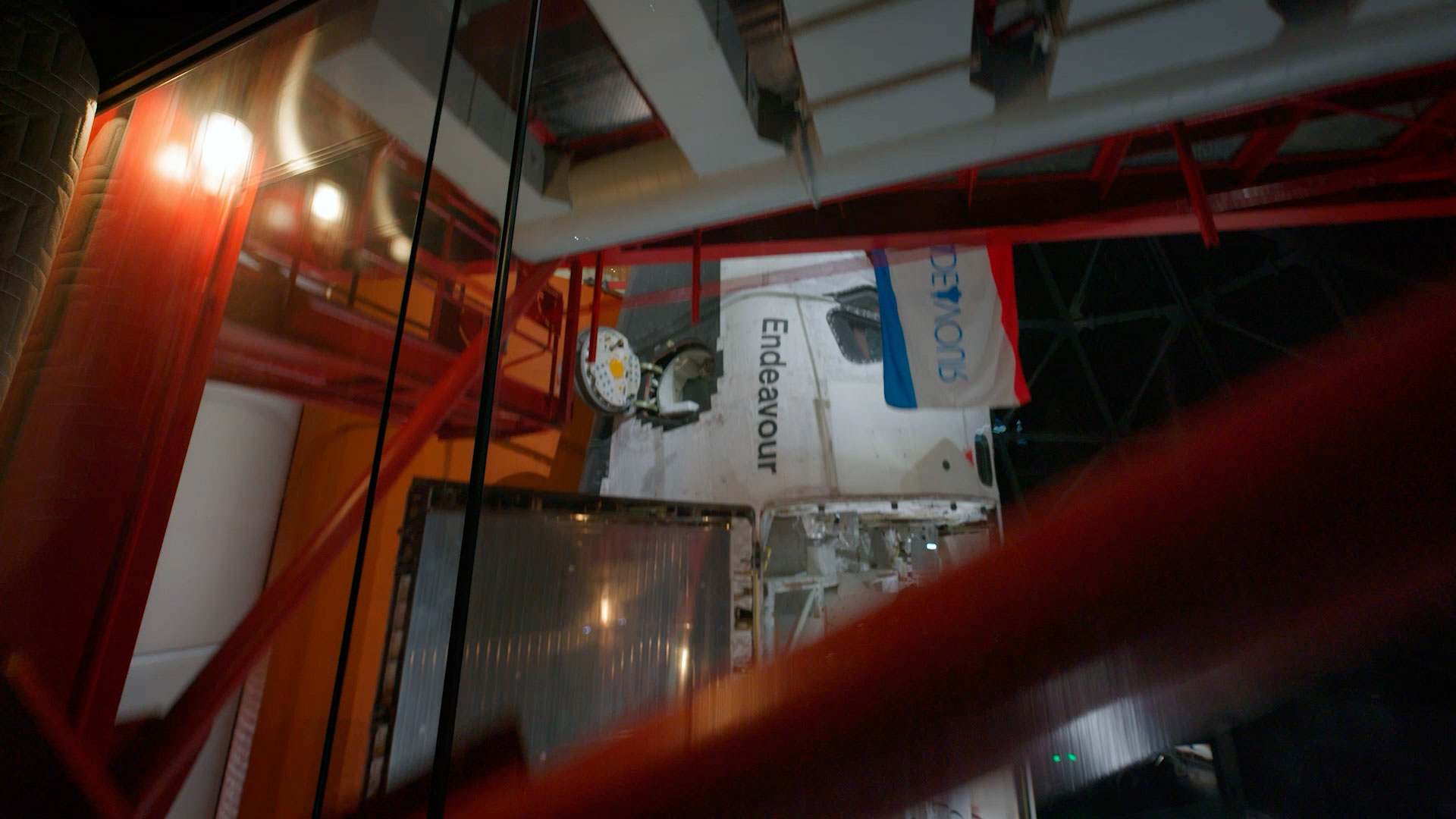
The launch tower elevators have glass windows providing a view of space shuttle Endeavour and the entire stack as it climbs to the 140-ft.-high glass observation platform. (California Science Center)
The shuttle descent slide represents the path Endeavour took from orbit back to Earth as a 45-foot drop. (California Science Center)
First-person view while riding the new Shuttle Descent Slide at the Samuel Oschin Air and Space Center. (California Science Center)
Looking down at the space shuttle Endeavour from the 140-foot-high glass observation platform at the top of the launch tower in the California Science Center's Samuel Oschin Air and Space Center, opening to the public on Thursday, Nov. 13, 2026. (California Science Center)